

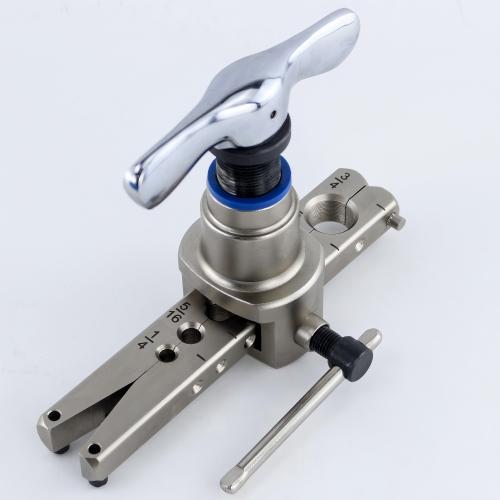
FT-806AM-F Eccentric Flaring Tool Kit
Professional Eccentric Flaring Tool Kit with Tube Cutter & Deburring Reamer (Metric & SAE)
Whether you are servicing HVAC systems, installing refrigeration lines, or working on automotive brake pipes, precision is everything. Designed for consistent workshop use, the TORCHMARK Eccentric Flaring Tool Set is configured to form smooth, uniform flares when the tube is prepared and clamped correctly.
Designed for both professional technicians and industrial sourcing, this comprehensive copper tube flaring kit includes everything needed to cut, deburr, and flare soft copper, aluminum, and brass tubing with minimal effort.
Key Features & Advantages
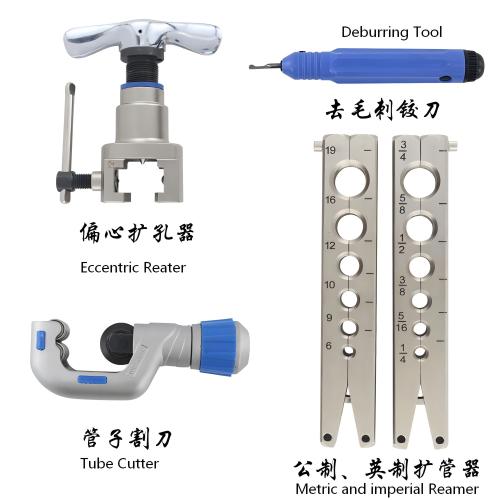
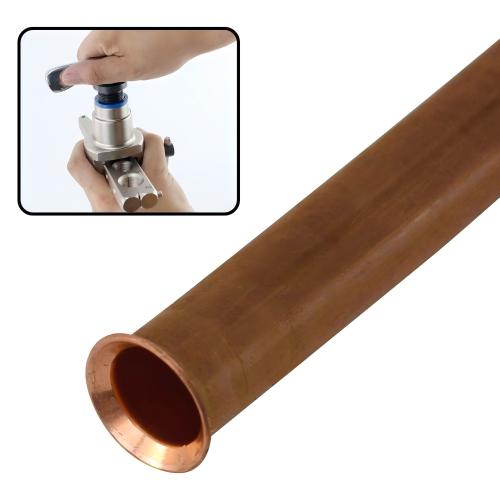
Precision Eccentric Cone Flaring: Unlike standard flaring tools, our off-center eccentric cone rolls the metal smoothly, helping form a smooth 45-degree flare while reducing direct sliding friction on the tube surface.
Dual-System Flaring Bars: Includes two high-strength clamping blocks to accommodate both international and North American standards.
Metric Sizes: 6mm, 9mm, 10mm, 12mm, 16mm, 19mm
Imperial (SAE) Sizes: 1/4", 5/16", 3/8", 1/2", 5/8", 3/4"
Heavy-Duty Bearing Tube Cutter: Features a premium 4-32mm capacity bearing cutter for fast, clean, and straight cuts on copper and aluminum piping.
Pen-Style Deburring Reamer: Includes a sharp, ergonomic deburring tool to remove internal burrs prior to flaring, supporting a consistent flare surface before assembly.
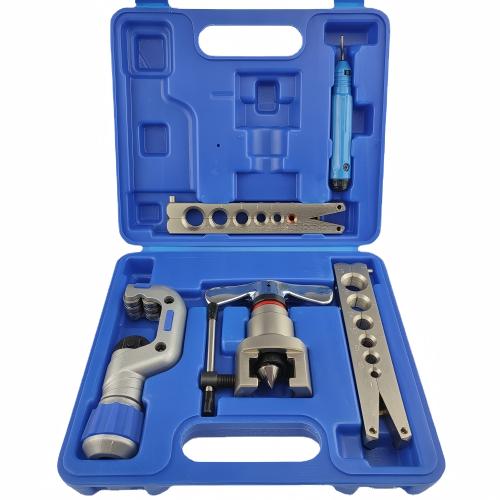
Organized for Workshop and Field Use: All components are neatly organized in a durable, blow-molded blue carrying case for easy transport and protection.
What’s in the Box? (Configuration List)
1 x Eccentric Flaring Yoke (Gantry)
1 x Metric Flaring Bar / Clamp Block
1 x Imperial (SAE) Flaring Bar / Clamp Block
1 x Bearing Tube Cutter (4-32mm)
1 x Pen-Style Deburring Tool
1 x Heavy-Duty Blue Storage Case
Product Specifications
Application: HVAC/R, Plumbing, Automotive, Refrigeration Maintenance
Compatible Materials: Soft Copper, Aluminum, Brass, and Thin-walled Steel Tubing
Package Dimensions: 29 x 23 x 7 cm
Gross Weight: 2.8 kg
Manufacturer: TORCHMARK (Wholesale & B2B Supply)
Packaging & Custom OEM Services
Whether you are a regional distributor or building your own private label HVAC tool brand, our packaging is designed for safe international transit and retail readiness.
Durable Individual Packaging: Each flaring kit is secured inside a heavy-duty, impact-resistant blow-molded carrying case. This keeps the precision components organized and protected from jobsite wear and tear.
Wholesale Master Cartons: To optimize freight costs and ensure safe palletizing, our standard bulk packaging is 10 tool kits per master carton.
Private Label & Branding (OEM): We support your brand's growth with comprehensive customization options. We can laser engrave your company logo directly onto the tools and manufacture custom-printed master cartons featuring your specific artwork, barcodes, and shipping marks.
Why Source from TORCHMARK?
As a supplier of plumbing and HVAC hand tools, TORCHMARK supports B2B buyers with documented specifications, export-ready packaging and OEM branding options for bulk orders.
Flaring Tool Selection and Quality Resources
For setup technique and common operating mistakes, read How to Use a Flaring Tool for Copper Tubing. B2B buyers can also use our Copper Tube Flaring Tool Quality Checklist when comparing samples and suppliers. To select the correct clamp-bar standard for the destination market, see our Metric vs SAE Flaring Tool Kits B2B Buying Guide.
Order Information & Inquiry Options
Choose the channel that fits your buying process.
WhatsApp / WeChat: +86 158 6745 7689 — for initial specification and availability questions
Email: amy@longrunhardware.com — for formal RFQ with target spec, quantity, destination port, and Incoterms (FOB Ningbo / CIF / DDP)
RFQ form: Request a Quote online — submit your target specification, quantity and destination
For OEM / private-label programs, please include your target spec, color, logo file (AI / PDF / PNG), retail box design, quantity, and destination port. Our export team will confirm specification, sample plan, lead time, and FOB / CIF pricing.
About the Author
Alisa Xu | Product Manager | Ningbo Torchmark Hardware Co., Ltd.
0086-13429254575 | Alisa Xu on LinkedIn
What the eccentric cone changes about the flare
The word eccentric is the whole specification of this kit. It describes how the cone moves against the tube, and that motion is what separates it from a plain flaring punch.
A centred cone rubs across the tube
A conventional cone pushes straight down the tube axis. The contact face slides across the metal as it opens it, and that sliding is what burnishes, thins and sometimes scores the flare face.
An offset cone rolls instead of sliding
The eccentric cone is mounted off its drive axis, so it contacts the tube progressively and rolls the wall outward rather than dragging across it. Less sliding friction means less heat and a cleaner surface at the sealing face.
Why that matters at the seal
A flare seals on its cone face against the fitting. A face that has been scored or thinned by sliding is the face that leaks. The mechanical advantage of this design shows up at the joint, not in the specifications.
Two size systems in one case
This kit ships with a metric bar and an SAE bar. They are parallel systems, not interchangeable ones, and understanding that prevents the most common ordering mistake.
| Metric bore | Nearest SAE bore | Typical application |
| 6 mm | 1/4 in (6.35 mm) | Small split-system and control lines |
| 9 mm | — | Metric refrigeration and appliance tube |
| 10 mm | 3/8 in (9.53 mm) | Common mini-split liquid and suction lines |
| 12 mm | 1/2 in (12.70 mm) | Larger residential refrigerant lines |
| 16 mm | 5/8 in (15.88 mm) | Commercial refrigerant and larger copper |
| 19 mm | 3/4 in (19.05 mm) | Large commercial suction lines |
A metric bar will not clamp an inch tube properly
The bores are machined to one system. Putting 1/2 inch tube in a 12 mm bore leaves clearance, and the tube pushes down when the cone enters.
The 9 mm bore is why the metric bar exists
There is no SAE equivalent for 9 mm. Distributors selling into markets built on metric tube need that bore, which is the practical reason to carry both bars rather than one.
The cutter and the reamer are part of the process, not accessories
Flare quality is decided before the cone touches the tube. Two included tools cover the preparation step.
A bearing cutter at 4–32 mm
A bearing cutter keeps the wheel square to the tube as it rotates, which is what produces a cut that is perpendicular rather than angled. An angled cut produces an angled flare.
Deburring before forming
The pen-style reamer removes the internal burr left by the cut. A burr holds debris and can score the fitting cone, and it is the cheapest failure in flaring to prevent.
Why preparation beats tooling
Most flare complaints traced back to the tool turn out to be cut and deburr problems. Including both in the case removes the excuse and the failure.
Packing data and what it means for freight
The published figures are case dimensions of 29 x 23 x 7 cm and a gross weight of 2.8 kg. Those two numbers drive the logistics conversation.
Why distributors care about the case size
A blow-moulded case protects the tooling in transit but ships air. Freight on a bulky low-weight item is quoted on volume, so the carton count per pallet matters more than the net weight.
Confirm sets per carton before quoting freight
Ask for the final sets per export carton, carton dimensions and gross weight. Those numbers are what your forwarder needs, and they differ from the individual case figures.
Retail readiness of a blow-moulded case
A case with a defined layout and closure can go straight to a shelf. That is the reason a distributor selling into retail channels usually prefers a cased kit over a bagged one.
When an eccentric kit is the wrong recommendation
Naming the limits keeps a distributor from selling a tool into an application it will fail.
Steel brake line work
Brake tube needs a double or inverted flare. A 45-degree cone for soft tube is not the tooling for a safety-critical steel joint.
37-degree hydraulic fittings
JIC and AN fittings use 37 degrees. A 45-degree flare will look right and will not seal.
Hard or thick-wall tube
The kit is specified for soft copper, aluminium, brass and thin-wall steel tube. Anything outside that list needs bench tooling with more clamping force.
Production volume work
A hand kit is a field and workshop tool. A line producing hundreds of flares a day should look at powered or bench-mounted equipment.
What to verify on a sample kit
Four checks cover what fails in the field.
Form a flare in both bars
Work through the metric bores and the SAE bores on scrap tube of the matching system. A bore that nominally exists but will not grip is the defect to find on a sample.
Cut and deburr with the supplied tools
Use the included cutter and reamer rather than bench equipment, because that is how your customer will work. The flare should come out clean from the supplied process.
Look at the flare face
The formed surface should be smooth rather than burnished or scored. Scoring points at the cone finish or at a missing deburr step.
Seat it on a real fitting
Thread the matching nut and tighten it. The flare should sit fully on the fitting cone instead of bottoming out early.
Questions buyers ask about the FT-806AM-F
What does eccentric actually mean here?
The cone is mounted off its drive axis, so it rolls the tube wall outward instead of sliding across it. Less sliding friction gives a cleaner surface at the face that seals.
Are the metric and SAE bars interchangeable?
No. Each bar is machined to one system, so use the metric bar for metric tube and the SAE bar for inch tube. Shipping both is what makes one kit serve two markets.
Which tube materials can it form?
Soft copper, aluminium, brass and thin-walled steel tube as specified. Hard, thick-wall or stainless tube needs bench tooling with more clamping force.
Does it do double flares for brake line?
No. Brake tube needs a double or inverted flare, which is a different forming step and different adapters. Use brake line tooling for that application.
What are the packing figures?
The individual case is 29 x 23 x 7 cm at 2.8 kg gross. Ask for the sets per export carton and carton gross weight for freight planning, since those differ from the case figures.
Can we add our brand and artwork?
Logo, case colour and retail artwork are OEM options quoted against the configuration. Raise it during the enquiry because artwork approval affects the lead time.
Request a quotation for the FT-806AM-F
Send the tube sizes and materials to be covered, the bar configuration, quantity and destination, and we will return packing data and a quotation. Email amy@longrunhardware.com, alisa@longrunhardware.com, or message us on WhatsApp at +86 158 6745 7689. Product Manager Alisa Xu handles this range. Fixed-bar alternatives are on the 7-hole double flaring kit page and the 8-piece kit page, larger brake sets on the 34-piece page and the BLF-24 page, and the full range sits under tube flaring tool kits. HVAC flare geometry is covered in the leak-free flare guide, sizing pitfalls in the inch versus metric guide, and OEM terms are listed on the OEM process page.
Related Buying Guides
Specifying flaring tools for HVAC or brake line work? These guides explain flaring types, common field mistakes and metric/SAE sizing.
Questions buyers ask about flaring tool kits
What is the difference between a 45-degree and a 37-degree flare?
A 45-degree flare is the standard for plumbing, LPG and general tube work; a 37-degree (JIC/AN) flare is used for hydraulic, fuel and higher-pressure lines. Mixing the two leaks, so match the flare angle to the fitting you connect to, not to the tool you happen to own.
When should I use a double flare instead of a single flare?
Use a double flare on soft copper and aluminum brake or fuel lines where vibration and pressure can crack a single flare. A single flare is enough for stationary plumbing and HVAC connections that are torqued once and left alone.
Which flare is required for R410A HVAC connections?
R410A systems run at higher pressure, so a clean 45-degree single flare on annealed copper with proper flare-nut torque is standard; many techs prefer flared joints over compression for these pressures. Always use a proper flaring block and avoid nicks on the tube mouth.
How do I prevent leaks at a flare joint?
Cut the tube square, ream the inside, flare without cracks, and seat the flare nut with a calibrated torque rather than by feel. A tiny dab of refrigerant-compatible oil on the seat helps; never use pipe dope on a flare face. Inspect the cone for cracks before assembly.
What sizes do flaring tools cover, metric and imperial?
Most kits cover the common range: 1/4, 5/16, 3/8, 1/2, 5/8 and 3/4 in, plus 4, 6, 8, 10 and 12 mm. Confirm the mandrel set matches the tubing you stock so you are not one size short on a job.
How do I avoid cracking copper when flaring?
Use annealed (soft) copper, support the tube in the correct-size clamp without over-tightening, and rotate the yoke evenly. Work the mandrel in smoothly rather than forcing it; a cracked flare wastes the tube and risks a leak.
Trial quantities for flaring kit configurations
For distributors adding a flaring kit to their catalogue, a small trial order covering the configurations you expect to stock is a practical way to start. We confirm the applicable minimum for each item per order.
Send the tube sizes and cone standard you serve, your first-order quantity and any carton-marking requirement, and we will confirm the matching kit, packing and terms.
Packaging & Custom OEM Services
Whether you are a regional distributor or building your own private label HVAC tool brand, our packaging is designed for safe international transit and retail readiness.
Durable Individual Packaging: Each flaring kit is secured inside a heavy-duty, impact-resistant blow-molded carrying case. This keeps the precision components organized and protected from jobsite wear and tear.
Wholesale Master Cartons: To optimize freight costs and ensure safe palletizing, our standard bulk packaging is 10 tool kits per master carton.
Private Label & Branding (OEM): We support your brand's growth with comprehensive customization options. We can laser engrave your company logo directly onto the tools and manufacture custom-printed master cartons featuring your specific artwork, barcodes, and shipping marks.