

HVAC Flaring & Bending Tool Kit
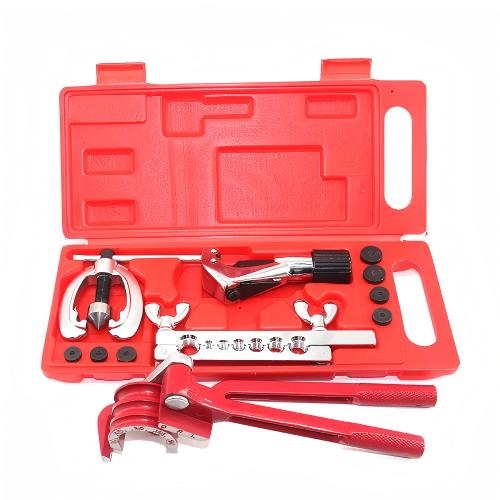
FT-2030AM and BT-369M HVAC Flaring and Bending Tool Kit
This TORCHMARK kit combines tube preparation, flaring and bending tools for HVAC distributors, refrigeration suppliers and professional service-tool ranges. Buyers can source the complete kit or confirm individual tool configurations for private-label programs.
Kit Configuration
| Component | Model / Range | Primary Function |
|---|---|---|
| Flaring tool | FT-2030AM | 45° flaring for compatible soft-metal tubing |
| Manual tube bender | BT-369M; 6, 8 and 10 mm | Bends up to 180° |
| Tube cutter | 3–28 mm | Tube cutting before deburring and flaring |
| Storage case | Blow-molded case | Organized transport and inventory control |
FT-2030AM Flaring Tool Sizes
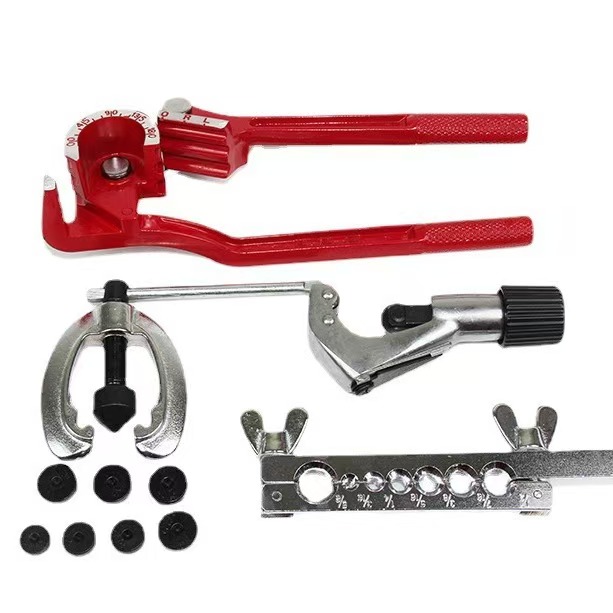
Metric: 4.75, 5, 6, 8 and 10 mm
Inch references: 3/16, 1/4 and 1/2 in
Application: compatible copper, aluminum and brass tubing; confirm material and wall thickness before ordering
Size markings and actual clamping-hole configuration should be checked against the intended market standard. For help choosing metric or inch tooling, read our Metric vs SAE flaring tool kit buying guide.
BT-369M Tube Bender
Metric tube sizes: 6, 8 and 10 mm
Maximum bend angle: 180°
Manual lever operation with angle reference markings
Bending performance depends on tube material, wall thickness and temper. Sample testing with the buyer's actual tubing is recommended before volume purchasing.
What B2B Buyers Should Confirm
Target tube outside diameters and whether metric, SAE/inch or both are required.
Tube material, wall thickness and application.
Complete kit contents and replacement cutting-wheel requirements.
Case color, logo method, inserts, labels and master-carton marking.
Target quantity, sample requirements and destination port.
Wholesale and OEM Options
Distributors may request private-label marking, case color and packaging options. Availability, minimum order quantity and lead time depend on the selected configuration, so these points should be confirmed in the quotation.
Related Sourcing Resources
Compare our FT-806AM-F eccentric flaring tool kit or browse the tube flaring tool kit category.
Information to Include in an RFQ
Send the required tube sizes, target quantity, destination, branding method, case color and packaging format. Request a quotation for the FT-2030AM and BT-369M kit.
About the Author
Alisa Xu | Product Manager | Ningbo Torchmark Hardware Co., Ltd.
0086-13429254575 | Alisa Xu on LinkedIn
What the three components each do
A combination kit is only worth more than its parts if the parts are the right ones. This one pairs a 45-degree flaring tool with a three-size bender and a cutter.
The cutter prepares the tube
Cutting at 3 to 28 mm covers the sizes both other tools work on. A square cut is the step that decides whether a flare seals, so the cutter is not an accessory here.
The bender routes the tube
The BT-369M covers 6, 8 and 10 mm and bends to 180 degrees. Those three sizes are the ones that appear most often on residential and light commercial refrigerant lines.
The flaring tool terminates it
The FT-2030AM forms the 45-degree flare that the fitting seats on. After bending and cutting, this is the last step before assembly.
Why the sequence matters
Cut, deburr, bend, flare. Doing the flare first and then bending usually deforms it, and that is the sequence error behind a joint that leaks on pressure test.
The three bender sizes and what they cover
A fixed three-size bender is a range decision. It covers the common sizes and leaves the rest, which is the right trade for most HVAC work.
| Bender size | Common HVAC use | Note |
| 6 mm | Small liquid lines, control and instrument tube | Tightest bends, easiest to kink |
| 8 mm | Split-system lines on some regional specifications | Check the unit data before assuming |
| 10 mm | Common mini-split liquid and suction lines | The volume size in most markets |
Sizes outside the three
12.7 mm and 15.88 mm lines appear on larger residential and commercial work. Those need a bender with the matching former, which is why a buyer serving commercial jobs usually carries a second bender.
Why 180 degrees matters
A full 180-degree bend is what lets a line double back within a tight space without a fitting. Fewer fittings means fewer potential leak points, which is the argument for bending rather than joining.
Kinking is a radius problem
A bend tighter than the tube tolerates collapses the section. Keeping the radius generous is what keeps the refrigerant flow unrestricted.
Where a combined kit beats buying separately
For some buyers the kit is right, for others it is duplicated tooling. Two questions settle it.
Buying for a new programme
A distributor starting an HVAC range needs all three functions at once. One kit with one case and one part number is easier to list than three separate lines.
Buying to extend an existing range
A buyer who already stocks a flaring tool pays for a duplicate. In that case the bender and the cutter are the parts to buy, not the kit.
Case and inventory control
A blow-moulded case keeps the three components together and counts as one unit in inventory. That is a real saving in picking and stocktaking, not just packaging.
Fewer suppliers to reconcile
One kit means one specification sheet, one sample approval and one packing list. On a first order that consolidation is worth more than the marginal price difference.
When this kit is the wrong specification
Naming the limits is what prevents the return.
Steel brake line work
Brake tube needs a double or inverted flare. A 45-degree tool for soft metal is not the tooling for a safety-critical steel joint.
37-degree hydraulic fittings
JIC and AN fittings use 37 degrees. A 45-degree flare looks right and does not seal.
Large commercial lines
Above about 10 mm the bender has no former. Larger refrigerant lines need a bender with matching sizes and more leverage.
Hard or thick-wall tube
The kit is specified for soft metal. Hard tube needs bench tooling with more clamping force.
What to check on a sample before ordering
Four checks cover both tools.
Cut, deburr and flare one tube end
Run the full sequence on scrap tube of a size the bender covers. The flare should seat on a real fitting rather than bottoming out early.
Bend each of the three sizes
Work 6, 8 and 10 mm through a 180-degree bend. A size that kinks in the former is the defect to find on the sample.
Check the cutter stays square
Cut a piece and look at the end. An angled cut produces an angled flare, which is the failure that shows up at pressure test.
Confirm the case layout
All three components should have a defined place. Loose components in transit is what arrives as a complaint at goods-in.
Questions buyers ask about the HVAC flaring and bending kit
Which tube sizes does the bender cover?
6, 8 and 10 mm, bending to 180 degrees. Larger refrigerant lines such as 12.7 and 15.88 mm need a bender with the matching former.
Does the flaring tool do brake line?
No. Brake tube needs a double or inverted flare, and this tool forms a 45-degree flare for soft metal. Use brake line tooling for steel tube.
What is the cutter range?
3 to 28 mm, which covers the sizes the bender and flaring tool work on. A square cut is what makes the flare seal.
Can the components be bought separately?
Yes. A buyer who already stocks a flaring tool should buy the bender and cutter rather than the kit, to avoid duplicating tooling.
Is the 45-degree flare right for HVAC?
Yes for soft copper and compatible soft metal on refrigerant work. It is not right for 37-degree hydraulic fittings or steel brake tube.
Can we add our brand and artwork?
Logo, case colour and retail artwork are OEM options quoted against the configuration. Raise it at the enquiry because artwork approval affects lead time.
Request a quotation for the HVAC flaring and bending kit
Send the tube sizes to be covered, quantity, packaging requirement and destination, and we will return packing data and a quotation. Email amy@longrunhardware.com, alisa@longrunhardware.com, or message us on WhatsApp at +86 158 6745 7689. Product Manager Alisa Xu handles this range. Other benders are on the TB364 page and the TB365 heavy-duty page, combination sets on the CT-100 page and the flaring and bending kit page, and the wider range sits under pipe and tube benders and tube flaring tool kits. Flare geometry is explained in the leak-free HVAC flare guide, bending and cutting technique in the copper pipe cutting and bending guide, and OEM terms are on the OEM process page.
Related Buying Guides
Specifying flaring tools for HVAC or brake line work? These guides explain flaring types, common field mistakes and metric/SAE sizing.
Questions buyers ask about flaring tool kits
What is the difference between a 45-degree and a 37-degree flare?
A 45-degree flare is the standard for plumbing, LPG and general tube work; a 37-degree (JIC/AN) flare is used for hydraulic, fuel and higher-pressure lines. Mixing the two leaks, so match the flare angle to the fitting you connect to, not to the tool you happen to own.
When should I use a double flare instead of a single flare?
Use a double flare on soft copper and aluminum brake or fuel lines where vibration and pressure can crack a single flare. A single flare is enough for stationary plumbing and HVAC connections that are torqued once and left alone.
Which flare is required for R410A HVAC connections?
R410A systems run at higher pressure, so a clean 45-degree single flare on annealed copper with proper flare-nut torque is standard; many techs prefer flared joints over compression for these pressures. Always use a proper flaring block and avoid nicks on the tube mouth.
How do I prevent leaks at a flare joint?
Cut the tube square, ream the inside, flare without cracks, and seat the flare nut with a calibrated torque rather than by feel. A tiny dab of refrigerant-compatible oil on the seat helps; never use pipe dope on a flare face. Inspect the cone for cracks before assembly.
What sizes do flaring tools cover, metric and imperial?
Most kits cover the common range: 1/4, 5/16, 3/8, 1/2, 5/8 and 3/4 in, plus 4, 6, 8, 10 and 12 mm. Confirm the mandrel set matches the tubing you stock so you are not one size short on a job.
How do I avoid cracking copper when flaring?
Use annealed (soft) copper, support the tube in the correct-size clamp without over-tightening, and rotate the yoke evenly. Work the mandrel in smoothly rather than forcing it; a cracked flare wastes the tube and risks a leak.
Optimized Tool Packaging Solutions for Regional Wholesalers and Distributors
At Longrun Hardware, we understand that professional-grade tools require professional-grade packaging. Our commitment to quality extends beyond the tool itself to ensure your inventory arrives in pristine condition, ready for retail display or immediate job site use. We offer optimized packaging solutions for our wholesale tubing tools that balance durability with market appeal.
H3: Product-Specific Inner Packaging
HVAC Flaring Tool Kit: Each precision copper pipe flaring tool set is housed in a heavy-duty, blow-molded carrying case. This durable case provides excellent impact resistance during transit and offers organized storage for technicians, enhancing the perceived value of the product for your customers.
Manual Pipe Bender: Our heavy-duty manual pipe benders are individually packed in vibrant, high-quality color boxes. This retail-ready tool packaging is designed for excellent shelf presence in hardware stores or supply houses, making it easier for you to market to end-users.
H3: Secure Bulk Shipment
Both the blow-molded cases and the color boxes are consolidated into strong, double-wall kraft master cartons. This robust outer packaging is specifically engineered for bulk tool shipment, providing maximum protection against rough handling and environmental factors during international sea or air freight.
H3: Custom Packaging & OEM Services
We support our global partners with flexible packaging options. For orders meeting our low MOQ, we provide custom private label packaging solutions. Whether you need your logo on the blow-molded case, a custom-designed color box for the bender, or specific labeling on the kraft master carton, we can coordinate your branding requirements.
Reduce transit damage and improve your retail margins with our professionally packed tools. Contact our sales team today for a bulk quote and customization options.