


TB364 Lever-Type Tube Bender | 12 mm & 1/2 in
TB364 Lever-Type Tube Bender for HVAC and Refrigeration Work
The TORCHMARK TB364 Series is a manual lever-type tube bender for distributors, HVAC tool suppliers and professional installers who need dedicated-size bending tools for copper, aluminum, thin-wall stainless-steel and steel tubing. The series supports bends up to 180 degrees and is available in inch and metric versions.
Models and Technical Specifications
| Model | Tube Outside Diameter | Maximum Bend Angle | Suitable Tube Materials |
|---|---|---|---|
| TB364-08A | 1/2 in (12.7 mm) | 180° | Copper, aluminum, thin-wall stainless steel and steel |
| TB364M-08 | 12 mm | 180° | Copper, aluminum, thin-wall stainless steel and steel |
Procurement note: Tube wall thickness, hardness and temper affect bending results. Buyers should confirm the target tube specification and request sample validation before placing a volume order.
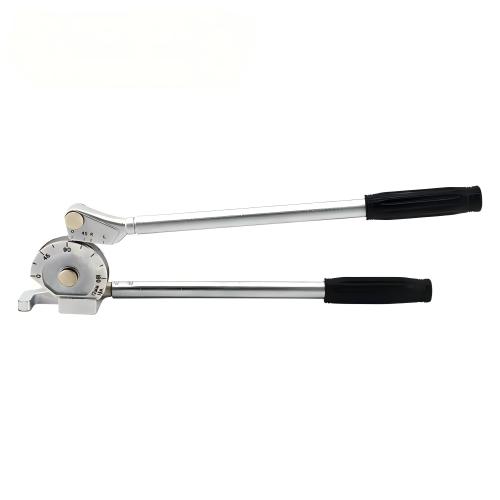
Features Relevant to B2B Buyers
Dedicated-size bending form: each model is matched to one tube outside diameter.
Up to 180° bending: suitable for common HVAC and refrigeration routing tasks.
90° starting hook: holds the tube at the beginning of the bending operation.
Angle markings: provide a visual reference for repeated bends.
OEM supply options: request private-label, color, packaging and batch-quantity information.
How to Select the Correct Model
Measure the tube outside diameter and choose either the 1/2-inch or 12 mm version.
Confirm tube material, wall thickness and temper.
Check the required bend angle and centerline-radius requirement.
For repeat production or resale, validate a sample using the buyer's actual tubing.
Bending Radius Reference
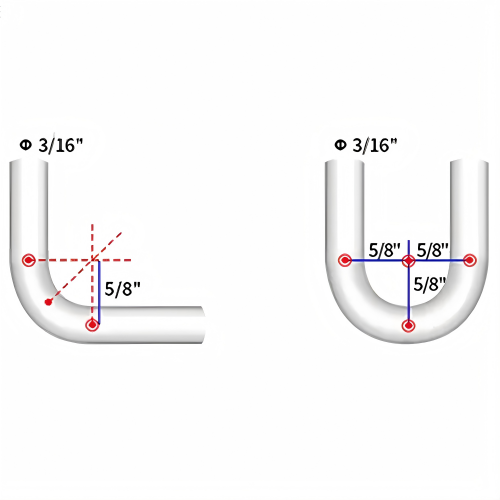
The bending radius is measured from the center of the bend to the centerline of the tube. Follow the model-specific radius and the tube supplier's minimum-radius guidance. Read our manual tube bender buying guide.
Related HVAC Tube Preparation Tools
Compare tube flaring tool kits and the Metric vs SAE flaring tool kit buying guide.
Information to Include in an RFQ
Required model and tube outside diameter
Tube material, wall thickness and temper
Target quantity and destination country or port
OEM logo, color and packaging requirements
Sample or inspection requirements
Request a quotation for the TB364 Series with the application details above.
About the Author
Alisa Xu | Product Manager | Ningbo Torchmark Hardware Co., Ltd.
0086-13429254575 | Alisa Xu on LinkedIn
12 mm or 1/2 in: the choice that causes returns
The two models in this series differ by 0.7 mm of tube diameter, and that is enough to ruin a bend. A 12.7 mm shoe used on 12 mm tube lets the tube ride out of the groove, and the result is a kinked apex that the installer blames on the tube. Before quoting, confirm which tube standard the customer actually runs — the fittings in the box are the giveaway, since a 1/2 in flare nut will not seat on 12 mm tube.
Where this single-size tool earns its place
A set is the right purchase for a counter that serves walk-in trade. A single-size lever bender is the right purchase for a service van: one tool, one groove, no setup step, and a replacement cost that does not require approval. Crews bending 1/2 in all day rarely need anything else.
Questions worth answering before the PO
How deep a bend? Up to 180 degrees, with the lever carrying the tool through the final part of the arc — that is where a hand bender usually stalls and ovalises the tube.
Can we order one of each? Yes, and most distributors serving both metric and inch markets do. Two models, one purchase order, one spare-parts list.
What about branding? Body colour to a Pantone reference, laser marking on the handle, and printed sleeves are all available before production, not after.
Model table and tube compatibility are set out on our lever-type tube bender page.
What the lever design changes
A lever bender is one of three ways to bend tube, and it sits between a spring and a powered machine. Knowing where it sits is what makes the recommendation correct.
A spring supports the wall from inside
An internal spring holds the tube round through the bend. It is the simplest answer on small diameters in tight spaces, and it is cheap enough to give away with a kit.
A lever bender gives leverage and a defined radius
The former sets the bend radius and the lever supplies the force. That is what produces consistent, repeatable bends on sizes a spring struggles with.
A powered bender is for volume
Repetitive bends at a fixed radius are faster on powered equipment. A lever tool suits field work and low volumes, where setup time would dominate.
The trade is portability
A lever bender fits in a bag and needs no power. That is why it is the default for service work rather than fabrication.
12 mm or 1/2 in: why the model number matters
This range ships in two versions, and the specification difference is small enough to be missed on an order form.
| Model | Tube outside diameter | Maximum bend angle | Tube materials |
| TB364-08A | 1/2 in (12.70 mm) | 180° | Copper, aluminium, thin-wall stainless and steel |
| TB364M-08 | 12 mm | 180° | Copper, aluminium, thin-wall stainless and steel |
0.7 mm is enough to matter
12.70 mm and 12 mm differ by less than a millimetre, but the former is machined to one. Putting 12 mm tube in a 1/2 inch former leaves the tube loose, and the bend comes out slightly off radius.
Match the model to the tube, not to the market
The right question is which tube the customer buys, not which country they are in. Some markets run metric tube with imperial fittings, and the tube is what the former touches.
Both bend to 180 degrees
The angle capability is the same on both. The difference is purely the tube diameter the former is cut for.
Confirm it on the order
Asking which of the two models is being shipped is the cheapest way to avoid a return. It is a single line on the quotation.
Materials this bender will take
The published list is copper, aluminium, thin-wall stainless steel and steel. Each behaves differently in the former.
Copper is the easy case
Annealed copper bends cleanly to 180 degrees. Half-hard tube resists more and is prone to springback, so the bend has to be taken slightly past the target angle.
Aluminium needs a wider radius
Aluminium work-hardens faster than copper and cracks if the radius is too tight. On aluminium, take the bend slower and do not over-tighten.
Thin-wall stainless is the upper limit
Stainless is harder and springs back noticeably. It is on the list, but it is the material most likely to show springback, so allow for it.
Steel tube needs the wall thickness confirmed
Thin-wall steel bends, thick-wall does not. Confirm the wall before recommending the tool for a steel application.
Getting a bend right in the field
Four habits separate a clean bend from a flattened one.
Mark the tube before bending
A mark at the intended centre of the bend makes the bend repeatable. Judging by eye is what produces a run of fittings that do not line up.
Support both sides of the bend
The tube should be seated in the former along its length rather than at one point. Partial seating is what creates a flat spot.
Go slightly past the angle
Springback means a bend released at exactly 90 degrees comes back short. Overshooting by a few degrees is standard practice, and the amount varies by material.
Do not bend near a flare
Bending after flaring distorts the flare face. Flare last, which is the same reason the sequence in a kit matters.
Where a single-size bender is the wrong tool
This tool does one size well. That is a strength in some channels and a limitation in others.
Multi-size service work
A technician meeting 6, 8, 10 and 12 mm on the same day needs a multi-former bender or more than one tool. One size is not a range.
Large commercial lines
Above about 12 mm this tool has nothing to offer. Larger lines need a bender with the matching former and more leverage.
Fabrication and production
Repetitive bending is faster and more consistent on powered equipment. A lever tool is a field tool.
Thick-wall tube
Only thin-wall tube is in specification. Thicker wall needs more force and a heavier former than a hand tool provides.
Questions buyers ask about the TB364
What is the difference between the two models?
The tube diameter the former is cut for: 1/2 inch on the TB364-08A and 12 mm on the TB364M-08. Both bend to 180 degrees and take the same materials.
Does 0.7 mm really matter?
Yes. A 12 mm tube in a 1/2 inch former sits loose, and the bend comes out slightly off radius. Match the model to the tube, not to the country.
Will it bend stainless?
Thin-wall stainless, yes, with noticeable springback. Thick-wall tube of any material needs more force than a hand lever tool provides.
How far can it bend?
To 180 degrees, which is what lets a line double back without a fitting. Fewer fittings means fewer leak points to find later.
Should I stock both models?
If your customers buy both 12 mm and 1/2 inch tube, yes. Some markets run metric tube with imperial fittings, so ask what tube they buy.
Can we add our brand and packaging?
Logo, handle colour and retail packaging are OEM options quoted against the configuration. Raise it at the enquiry because artwork approval affects lead time.
Request a quotation for the TB364
Send the model required, quantity, packaging and destination, and we will return packing data and a quotation. Email amy@longrunhardware.com, alisa@longrunhardware.com, or message us on WhatsApp at +86 158 6745 7689. Product Manager Alisa Xu handles this range. Multi-size benders are on the TB365 heavy-duty page, the combination kit on the FT-2030AM and BT-369M page, and the wider range sits under pipe and tube benders. Bending technique is covered in the copper pipe cutting and bending guide, sizing pitfalls in the inch versus metric guide, and OEM terms are on the OEM process page.
Related Buying Guides
Bending and tube-end preparation go together — these guides cover bender selection and metric vs inch tooling.
Questions buyers ask about pipe and tube benders
What is the difference between a spring bender and a hydraulic bender?
A spring bender is a low-cost hand tool for small copper and PVC tube where you slide a coiled spring over the tube to prevent collapse; a hydraulic bender pushes the tube against a form for larger diameters and tighter, repeatable angles. Pick by tube diameter and how many bends per day.
What bend radius should I use for copper or steel tube?
Keep to the manufacturer's minimum centre-line radius - typically 1.5 to 2 times the tube outside diameter for copper. Tighter than that and the wall flattens or kinks; wider than needed wastes space in the run.
How do I avoid kinking the tube when bending?
Use the correct-size former or spring, keep the tube supported through the bend, and bend smoothly rather than in one jerk. For thin-wall tube, a former that supports the inside (internal mandrel or full-radius spring) is the difference between a clean bend and a kink.
Can these benders handle stainless and aluminum tube?
Aluminum bends much like copper with the right radius; stainless needs more force and a hydraulic or mandrel bender because it work-hardens. Match the former material and the tool capacity to the tube you actually run.
How accurate is the bend angle?
Good hand benders hold the marked angle to within a few degrees when you watch the gauge; hydraulic models with angle stops are more repeatable across a batch. For layout-critical runs, mark and check the first piece before doing the lot.
First orders for single-size benders
If your market centres on one tube size, a small trial order of this bender lets you confirm fit and demand before committing to volume. We confirm the applicable minimum for each item per order.
Confirm the tube size, your first-order quantity and destination port, and we will reply with packing and order terms.