

42 mm Labor-Saving PVC PPR Pipe Cutter
42mm Labor-Saving Plastic Pipe Cutter | PVC PPR PE Pipe Cutting Tool – Longrun Hardware
Full Product Introduction (ready to paste on your website page):
At Longrun Hardware, we build tools that actually make your job easier. Our 42mm Plastic Pipe Cutter is the one plumbers and contractors reach for when they need clean, straight cuts on PVC, PPR, and PE pipes up to 1-5/8 inch (42mm) – no sawing, no mess, no extra sanding.
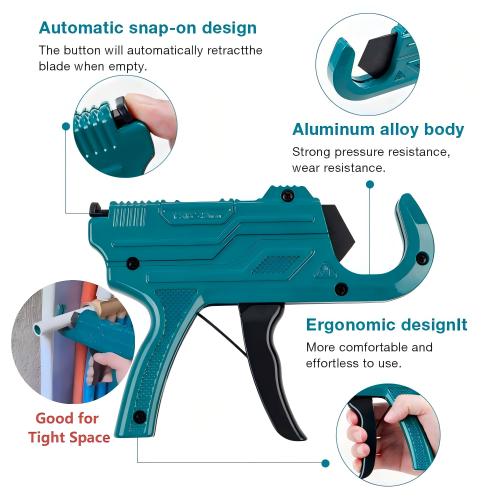
Just slip the pipe into the C-shaped jaw, squeeze the trigger, and the ratchet mechanism does the work for you. Each click advances the sharp blade smoothly until the cut is complete – quick, effortless, and burr-free every time.
We designed the ergonomic pistol-grip handle with textured rubber for a solid hold, even when your hands are wet or you’ve been cutting all day. The whole tool is lightweight, tough, and built to last on real job sites.
Why professionals keep coming back to this cutter:• Labor-saving ratchet action – cuts faster than manual saws • Replaceable high-carbon steel blade stays sharp cut after cut • Quick-release trigger for one-hand operation • Works perfectly on water supply pipes, drainage lines, and renovation projects • Durable ABS body that won’t crack or slip
Tired of pipes that won’t line up because of crooked cuts? Grab this tool once and you’ll wonder how you ever managed without it.
Need it in bulk for your crew or want a private-label version? Tell us your requirements and we’ll confirm the order terms. Drop us a message to discuss OEM/ODM orders.
Technical Specs (for your table):
Cutting Capacity: 1/8" to 1-5/8" (3–42mm)
Blade Material: High-carbon steel (replaceable)
Body Material: High-impact ABS + rubber grip
Weight: Lightweight for all-day use
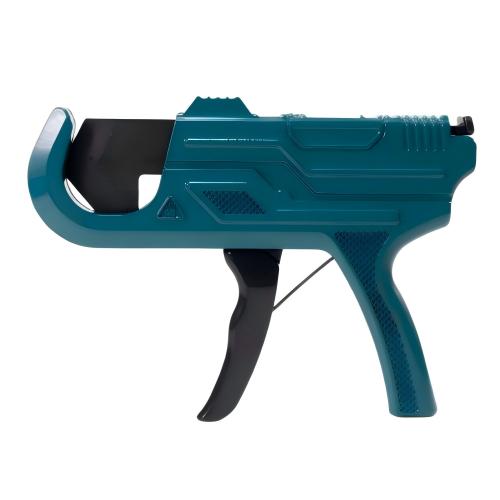
Color: Professional teal with black trigger
How to Use (short interactive section):
Open the jaw and place your pipe.
Squeeze the trigger – hear the ratchet click?
Keep squeezing until it cuts through.
Release and pull the pipe out – done!
Simple, right? Try it on your next job and feel the difference.
Order Information & Inquiry Options
Choose whichever channel fits your buying process — we reply to all three within 12 hours, Monday to Saturday.
WhatsApp: +86 15867457689 — Amy
Email: amy@longrunhardware.com — for formal RFQ with target spec, quantity, destination port, and Incoterms (FOB Ningbo / CIF / DDP)
RFQ form: Request a Quote online — structured form, 15 fields, takes ~3 minutes
For OEM / private-label programs, please include your target spec, color, logo file (AI / PDF / PNG), retail box design, quantity, and destination port. Our export team will confirm specification, sample plan, lead time, and FOB / CIF pricing.
About the Author
Alisa Xu | Product Manager | Ningbo Torchmark Hardware Co., Ltd.
0086-13429254575 | Alisa Xu on LinkedIn
Specification
| Parameter | Value |
|---|---|
| Cutting capacity | 3–42 mm (1/8 to 1-5/8 in) |
| Blade | High-carbon steel, replaceable |
| Body | High-impact ABS with rubber grip |
| Operation | Ratchet, one-hand quick-release trigger |
| Suitable pipe | PVC, PPR, PE |
| Nominal size | 42 mm / 1-5/8 in |
Why a ratchet matters on 42 mm pipe
Hand force is the constraint at this diameter
At 42 mm the wall of a pressure pipe is thick enough that a single-stroke cutter asks for a lot of grip strength. The ratchet splits the cut into a series of small advances, so the operator completes the cut with repeated light squeezes rather than one hard one. On a full day of work that difference is what keeps output up.
A cut that does not need sanding
A saw or a knife leaves a ragged edge that has to be cleaned before the pipe will seat in a fitting. A ratchet shear leaves a square, burr-free face, so the pipe goes straight to solvent welding or fusion without a second operation. That is the real saving — not the cutting itself.
Keeping the blade sharp
The blade is the wear item and it is replaceable. A dull blade is the usual cause of a cut that drifts out of square, so blade availability matters as much as the tool.
Choosing the right size for the job
42 mm covers most supply and drainage work
For water supply, drainage and renovation work, 42 mm is the practical upper limit most installers meet. Where the run is larger, a 63 mm ratchet cutter is the correct step up rather than forcing a smaller tool.
36 mm and 32 mm for lighter work
Smaller cutters are lighter and easier to carry, and they suit hose and smaller-bore supply lines. Many distributors stock 42 mm as the main line and 32 or 36 mm as the compact option.
Check the outside diameter, not the nominal pipe size
PVC and PPR are sized differently in different markets, and a nominal 1-1/4 in pipe is not the same outside diameter as a nominal 32 mm one. Confirm the actual outside diameter against the stated capacity before ordering.
Frequently asked questions
Will it cut PPR as well as PVC?
Yes. The stated capacity covers PVC, PPR and PE within 3–42 mm. Confirm the wall thickness of the pipe you install, because heavy-wall pipe is harder to shear.
Is the blade replaceable?
Yes. The high-carbon steel blade is a replaceable wear item — ask for spare blades with the order so the tool stays in service.
Does it need a power source?
No. It is a hand ratchet tool, which is why it suits site work, renovation and places where there is no power.
Can we have our own brand and packaging?
Yes. OEM and private-label programmes are supported, including colour, logo, retail box and blister format. Send artwork with the enquiry.
What packing is available?
Single blister and double blister are both used in this range, and bulk cartons suit industrial supply. Confirm the format when you request a quotation.
What should be on the enquiry?
Capacity required, pipe materials, blade spare quantity, packaging format, quantity and destination port — so price, MOQ and lead time come back in one reply.
Related tools and guides
63 mm ratchet PVC pipe cutter — the step up for larger diameters
36 mm pipe cutter for PVC and PPR — compact option
Send your required specification, order quantity and destination to our export team for a quotation covering price, MOQ, lead time and sample cost.
Related Buying Guides
Building a plastic pipe tooling line? These guides cover sizing standards and B2B sourcing basics.
Questions buyers ask about PVC pipe cutters
What is the difference between a ratcheting and a scissor-style PVC cutter?
A scissor cutter is light and fast for small-diameter, low-wall pipe you cut all day; a ratcheting cutter multiplies your force for larger or thicker-wall PVC and CPVC with less hand fatigue. Choose by the largest diameter you regularly cut.
What is the maximum diameter a PVC pipe cutter handles?
Scissor cutters typically cover up to about 42 mm (1-1/4 in); ratcheting models reach 50-63 mm (2-2-1/2 in) and heavy models a bit more. Cutting beyond rated capacity damages the blade and leaves a ragged edge.
How do I get a square, burr-free cut?
Mark a square line, keep the cutter square to the pipe, and close in steady strokes rather than twisting. A light pass with a deburring tool on the inside edge removes the lip that restricts flow and snags fittings.
When should I replace the blade?
Replace when cuts need more force, start to crush rather than slice, or leave a ragged or angled edge. A sharp blade cuts cleaner and puts less stress on the joint; keep a spare blade in the kit.
Can the same cutter be used on PEX or CPVC?
CPVC cuts like PVC with the same tool. PEX is better cut with a dedicated PEX/scissor cutter or a tubing shears to avoid distorting the bore; a PVC ratchet can pinch PEX out of round.
Double Blister
Single Blister
Paper Box