

63 mm Ratchet PVC Pipe Cutter Heavy Duty
63mm Automatic Heavy Duty Ratchet Plastic Pipe Cutter
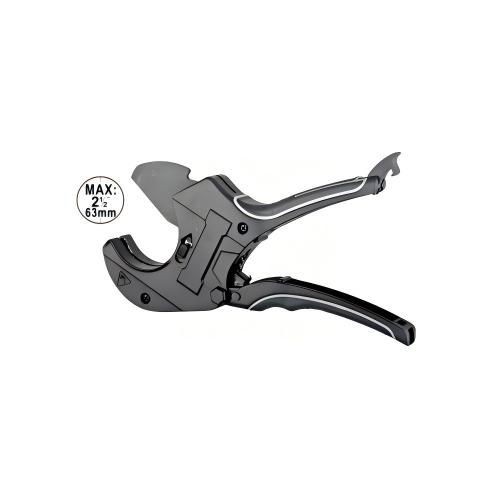
| Handle Material | aluminium alloy+TPR |
| Blade | Stainless Iron/High Carbon Steel |
| Surface treatment for the blade | Teflon for high carbon steel |
Cutting Dia. | 63mm |
| Color | customizable |
| Auto or not | Automatic |
| Selling Point | Blade could be replaced quickly. |
Features
Ratchet Shears are ideal for cutting PE, PEX, PP and ABS pipe and tubing.
Smoothest ratchet action for easiest cuts.
Replace or resharpen blades for longer tool life and faster cuts.
Order Information & Inquiry Options
Choose whichever channel fits your buying process — we reply to all three within 12 hours, Monday to Saturday.
WhatsApp: +86 15867457689 — Amy
Email: amy@longrunhardware.com — for formal RFQ with target spec, quantity, destination port, and Incoterms (FOB Ningbo / CIF / DDP)
RFQ form: Request a Quote online — structured form, 15 fields, takes ~3 minutes
For OEM / private-label programs, please include your target spec, color, logo file (AI / PDF / PNG), retail box design, quantity, and destination port. Our export team will confirm specification, sample plan, lead time, and FOB / CIF pricing.
About the Author
Alisa Xu | Product Manager | Ningbo Torchmark Hardware Co., Ltd.
0086-13429254575 | Alisa Xu on LinkedIn
What separates a 63 mm cutter that lasts from one that comes back
At this diameter the blade is doing more work per cut than on a 36 mm tool, and the ratchet is taking the load instead of the user's wrist. Two parts decide the outcome: the blade's heat treatment and the alignment of the pivot. A blade that is too hard chips against filled PVC; one that is too soft rolls over and starts to wander, which the customer describes as the tool "cutting crooked". A body that flexes at the pivot makes the pawl skip, and once it skips the tool will not hold pressure on a full 63 mm cut.
That is why the handle is aluminium alloy with a TPR overmould rather than pressed steel, and why the high carbon blade carries a Teflon coating: the coating reduces drag on plasticised PVC, and less drag means a cleaner cut face for longer.
Ordering notes
Blade spares are the difference between a single sale and a repeat line — quote them with the tool, on the same order. Packing is chosen by channel: single blister for pegboard retail, double blister where tools sell in pairs, and zip tie with colour card for the budget channel where the card carries the branding.
Three questions from distributors
Will it cut PPR as well as PVC? Yes. PPR is softer and cuts easily; the requirement for fusion welding is a square face, so a sharp blade and a steady stroke matter more than force.
How long does a blade last? It follows the pipe compound and wall thickness, not a fixed cut count. Filled and glass-filled compounds wear a blade far faster than plain pipe.
Can the whole family ship together? Yes — 32, 36, 42 and 63 mm in one mixed carton, which is the usual way a distributor opens the range.
The full specification and the rest of the size family are listed on our 63 mm ratchet cutter page.
What to confirm before ordering
A 63 mm ratchet cutter is bought for large-diameter plastic pipe, and the specification that matters is not the nominal size — it is the maximum outside diameter and the wall thickness it will actually shear. Confirm the following before you compare quotations.
| Parameter | What to state in the enquiry |
|---|---|
| Nominal size | 63 mm |
| Maximum outside diameter | State the actual OD of the largest pipe you install |
| Wall thickness | State the heaviest wall the tool must cut |
| Pipe material | PVC, PPR, PE — state which |
| Drive | Ratchet, hand operation |
| Duty expectation | Occasional site use or daily contractor use |
| Blade | Material and whether spares are required |
| Packing | Blister, colour box or bulk carton |
Why large-diameter plastic needs a ratchet
Grip strength runs out first
At 63 mm a single-stroke cut asks for more hand force than most operators can sustain, and a partial cut leaves a stepped edge that will not seat. The ratchet divides the cut into small advances, so the pipe is sheared with repeated light squeezes.
Squareness decides whether the joint holds
Large-diameter joints have more contact area, so an out-of-square face shows up as a joint that is under stress before it is even pressurised. A shear cutter leaves a square, burr-free face with no sanding.
Blade wear shows up as drift
On big diameters a dull blade does not fail suddenly — the cut gradually drifts out of square. Blade availability and a replacement schedule matter more here than on smaller cutters.
Choosing between 63 mm and smaller cutters
Where 63 mm is the right tool
Main drainage runs, larger supply lines and industrial plastic pipework. If the run is mostly smaller bore, a 42 mm cutter will be used more often and is lighter to carry.
Stocking a range
Most distributors carry 42 mm as the general-purpose line and 63 mm for the jobs that need it, because the two sizes do not substitute for each other and the price points sit apart.
Checking the OD, not the label
PVC and PPR are sized differently between markets. Measure the pipe you install and confirm the outside diameter against the stated capacity.
Frequently asked questions
Will one cutter handle both PVC and PPR?
Within its stated capacity, yes — but confirm the wall thickness, because heavy-wall pipe is the limiting factor rather than the material.
How do we know if 63 mm is enough?
Measure the largest outside diameter you install. Nominal pipe size and outside diameter are not the same, and the tool is limited by OD.
Is the blade replaceable?
Ask for the blade material and spare availability with the quotation. On large diameters blade condition drives cut squareness.
What duty cycle is it built for?
State whether the tool is for occasional site use or daily contractor use — it affects blade and body specification, and therefore price.
Do you support private label?
Yes — logo, colour and retail packaging. Send artwork with the RFQ so cost is quoted with the tools.
What should the enquiry include?
Maximum OD, wall thickness, pipe material, blade requirement, packing format, quantity and destination port.
Related tools and guides
42 mm labour-saving PVC PPR pipe cutter — general-purpose size
Send your required specification, order quantity and destination to our export team for a quotation covering price, MOQ, lead time and sample cost.
Related Buying Guides
Building a plastic pipe tooling line? These guides cover sizing standards and B2B sourcing basics.
Questions buyers ask about PVC pipe cutters
What is the difference between a ratcheting and a scissor-style PVC cutter?
A scissor cutter is light and fast for small-diameter, low-wall pipe you cut all day; a ratcheting cutter multiplies your force for larger or thicker-wall PVC and CPVC with less hand fatigue. Choose by the largest diameter you regularly cut.
What is the maximum diameter a PVC pipe cutter handles?
Scissor cutters typically cover up to about 42 mm (1-1/4 in); ratcheting models reach 50-63 mm (2-2-1/2 in) and heavy models a bit more. Cutting beyond rated capacity damages the blade and leaves a ragged edge.
How do I get a square, burr-free cut?
Mark a square line, keep the cutter square to the pipe, and close in steady strokes rather than twisting. A light pass with a deburring tool on the inside edge removes the lip that restricts flow and snags fittings.
When should I replace the blade?
Replace when cuts need more force, start to crush rather than slice, or leave a ragged or angled edge. A sharp blade cuts cleaner and puts less stress on the joint; keep a spare blade in the kit.
Can the same cutter be used on PEX or CPVC?
CPVC cuts like PVC with the same tool. PEX is better cut with a dedicated PEX/scissor cutter or a tubing shears to avoid distorting the bore; a PVC ratchet can pinch PEX out of round.
Single blister
Double Blister
Zip ties & card binding