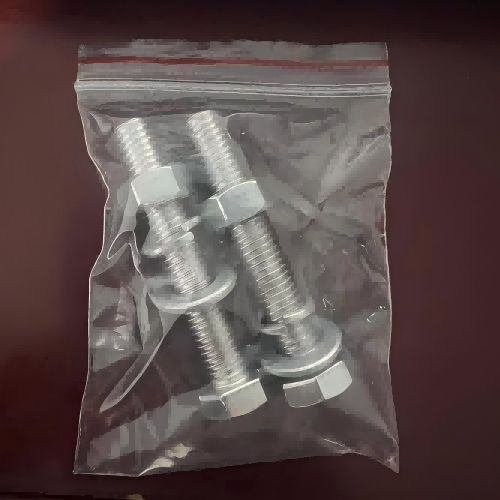


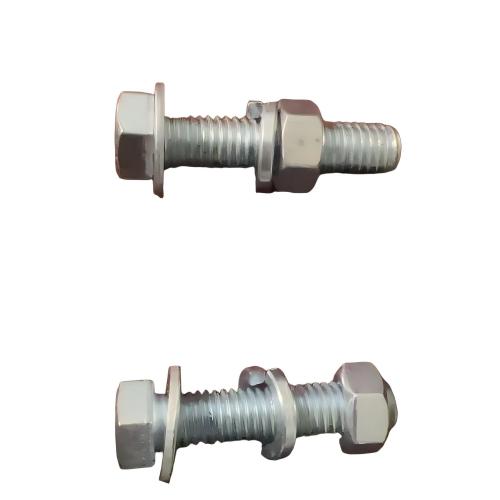
Stainless Steel Standard Custom-made Screws
Longrun Hardware is an enterprise specializing in the production and sales of fasteners, including bolts, nuts, screws, washers, etc., which are widely used in the automotive, aviation, construction and electronics industries.
Item: Stainless Steel Standard Custom-made Screws and Bolt
Material: Q235, Q 195
Strength of Extension:315-430mpa
Stem diameter: M8
Order Information & Inquiry Options
Contact our team with your required specification, order quantity and destination.
WhatsApp: +86 15867457689 — Amy
Email: amy@longrunhardware.com — for formal RFQ with target spec, quantity, destination port, and Incoterms (FOB Ningbo / CIF / DDP)
RFQ form: Request a Quote online — structured form, 15 fields, takes ~3 minutes
For OEM / private-label programs, please include your target spec, color, logo file (AI / PDF / PNG), retail box design, quantity, and destination port. Our export team will confirm specification, sample plan, lead time, and FOB / CIF pricing.
About the Author
Alisa Xu | Product Manager | Ningbo Torchmark Hardware Co., Ltd.
0086-13429254575 | Alisa Xu on LinkedIn
What "standard custom-made" means on a fastener purchase order
Our fastener line covers bolts, nuts, screws and washers for automotive, aviation, construction and electronics assembly. Buyers use the phrase custom-made loosely, and it hides two very different orders: a standard part bought to a published standard, and a part made to a drawing. The commercial terms, the tooling cost and the inspection plan are different in each case, so the first job on any enquiry is to establish which one the buyer actually needs.
Standard parts bought by designation
A standard part is specified by standard number plus size and grade — a hex bolt to a metric standard in a stated property class, a washer to a stated dimensional standard. Nothing is tooled, the price is a function of volume and material only, and the part can be re-sourced from another supplier without redesign. If your customer's assembly already references a standard designation, stay on it. Deviating adds cost and creates an approval problem on their side.
Drawing-controlled parts
A drawing-controlled part is defined by the buyer's own drawing: head geometry, thread length, undercut, chamfer, coating and inspection dimensions. This is where tooling enters the order. Expect a one-off tooling charge for non-standard heads and for thread rolling dies outside the usual range, and expect a first-article sample before mass production. The OEM process page sets out how drawing review, tooling approval and pre-production samples are sequenced.
Specification fields that must appear on the drawing
Most disputes on custom fasteners trace back to a drawing that was missing one field. The table below is the minimum we ask for before quoting, and it doubles as a checklist for distributors writing their own purchase orders.
| Field | Why it decides the price | Common omission |
|---|---|---|
| Thread specification and tolerance class | Determines die or rolling tooling and whether the part can be gauged | Thread stated as "M8" without pitch or tolerance class |
| Material grade and strength class | Drives material cost and whether heat treatment is needed | Grade stated only as "steel" |
| Full dimensional drawing with tolerances | Sets the machining route and inspection gauges | Nominal dimensions with no tolerance band |
| Surface finish and coating | Adds process steps and affects thread fit after coating | Coating named without a thickness range |
| Inspection dimensions and sampling level | Sets the inspection time and the acceptance criteria | No critical-to-function dimensions identified |
| Packaging and labelling | Affects carton count, freight and warehouse handling | Bulk weight given but no carton plan |
Reading the material and strength data correctly
The listing for this part shows Q195 and Q235 as base materials with a tensile strength band of 315 to 430 MPa and an M8 stem diameter. That combination tells you the part sits in the low-carbon, general-engineering range, which is the correct choice for fixtures, brackets, enclosures and light structural assembly. It does not describe a high-strength structural bolting application.
What a strength band does and does not tell you
A band is a range across a production lot, not a guaranteed minimum for every piece. Where an assembly depends on a minimum clamp load, the part must be specified to a property class or to a stated minimum tensile strength with a test certificate, and the certificate must reference the lot. Asking for a band and then testing to a minimum is the most common mismatch we see in incoming inspection.
When stainless should replace carbon steel
Stainless is specified for corrosion exposure — food equipment, marine fittings, outdoor fixtures, washdown areas — or where the assembly cannot be re-tightened after corrosion seizes the thread. It is not a drop-in substitute: austenitic stainless has a different strength profile, is prone to galling during assembly unless one thread is lubricated or a dissimilar grade is used, and costs materially more. Specify the grade and the passivation requirement, not just the word stainless.
Finishes and thread choices that move the price
Zinc plating, hot-dip galvanising, black oxide and passivation
Zinc plating is the default for indoor carbon steel and is the cheapest route. Hot-dip galvanising is specified for outdoor structural work and adds thickness that must be allowed for in the thread fit. Black oxide gives a controlled appearance but almost no corrosion protection unless oiled. Passivation applies to stainless and removes free iron left by machining, which is the difference between a part that stains in a month and one that does not.
Rolled thread against cut thread
Rolled thread is formed by displacing material rather than removing it, so the grain follows the thread root and fatigue performance improves. It is also faster, which is why the standard range is rolled. Cut thread is used for very large diameters or short runs where rolling dies are not justified. If a drawing specifies cut thread for a fatigue-critical part, the intent should be confirmed before the order is priced.
Incoming inspection a distributor can actually run
If your customer audits suppliers, the audit will land on the process rather than the drawing. Our production coordination page describes how production and inspection are arranged, and the B2B sourcing guides set out how a re-source programme is documented.
Full dimensional inspection needs a metrology lab. A distributor can still protect themselves with four checks: thread gauging on a sample from each lot using go and no-go gauges, a visual check for plating coverage and burrs at the thread start, a hardness or tensile check on a coupon if the part is strength-critical, and a weight check against the packing list to catch quantity shorts. Record the lot number against the certificate so a claim can be traced.
Ordering variables: tooling, quantity, packaging, documents
Fasteners rarely ship alone. Buyers assembling an installation kit usually pair screws with the setting tool the assembly needs, and our 14-inch rivet nut tool kit is the common companion line for sheet metal and enclosure work. Where the order spans several categories, the industry and application index groups the parts by the assembly they go into.
Custom fasteners are quoted against quantity because the tooling and set-up cost is spread across the run. Send the annual volume and the release schedule rather than a single order quantity, and state whether the part is a new programme or a re-source. Packaging is quoted separately: bulk cartons, small unit bags and labelled shelf packs all change the handling cost. For markets that require it, state the documentation set — material certificate, dimensional report, coating thickness report, RoHS or REACH declaration — at enquiry stage, because producing documents after shipment is not possible for a completed lot.
Questions buyers ask before ordering fasteners
Can you supply from an existing drawing without tooling?
Yes if the drawing matches a standard designation or an existing die in our range. Send it for review; tooling is quoted only where the head form or thread falls outside.
What is the minimum order for a custom screw?
Standard designs under neutral packing start at one carton. For drawing-controlled parts the MOQ follows the set-up cost and is stated in the quotation.
Do you supply material and test certificates?
Yes, if requested at enquiry stage. The certificate references the production lot shipped, so state the standard it must follow before production starts.
How do I specify stainless so galling does not appear in assembly?
State the grade and whether the mating thread is the same grade. Two austenitic parts need a lubricant or a dissimilar pairing, noted on the drawing.
Can fasteners be supplied in mixed sizes on one order?
Yes. Mixed orders are allocated by size and confirmed in the quotation, since carton count and packing per size affect the freight calculation.
Which documents are needed for a European or US customer?
Usually a material certificate, a dimensional report and a RoHS or REACH declaration. Request the set at enquiry stage; some tests are destructive and cannot follow production.
Send a drawing or a specification for quotation
Attach the drawing or the standard designation, the annual volume, the coating and the packaging format, and we will return a costed quotation with the tooling position stated separately.
WhatsApp: +86 15867457689 (Amy) · Email: amy@longrunhardware.com for formal RFQs · alisa@longrunhardware.com for specification review for samples and documentation. Replies within 12 hours, Monday to Saturday.
Related: screws, nuts and bolts range · ASTM A193 B7 / DIN 976 stud bolts · blind rivets by size and grip range · fasteners and riveting tools · sourcing FAQ.
Related Buying Guides
Riveting and fastening programmes: these guides cover OEM custom tooling and rivet gun type comparison.
Questions buyers ask about riveting tools
What is a riveting tool used for?
It sets blind (pop) rivets to join two materials from one side where you cannot access the back - the classic sheet-metal and panel fastening tool.
What rivet diameters are supported?
Hand riveters commonly take 2.4, 3.2, 4.0 and 4.8 mm (3/32 to 3/16 in) with interchangeable noses. Confirm the nose set matches the rivets you buy.
Blind rivet vs rivet nut - which do I need?
A blind rivet joins two parts; a rivet nut (see our rivet nut tools) adds a female thread. If you need to bolt into the joint later, use a rivet nut; if you only need a permanent joint, use a blind rivet.
Manual vs pneumatic riveters?
Manual suits occasional and field use; pneumatic or battery riveters speed up production volumes. Pick by how many rivets you set per day.
Small trial orders for rivet-nut ranges
To qualify a rivet-nut range, a small trial order covering the thread sizes and grip ranges you stock is a practical start. We confirm the applicable minimum for each item in the quotation.
Send the thread size, grip range, panel thickness and your first-order quantity, and we will confirm the matching tool, mandrels and terms per order.